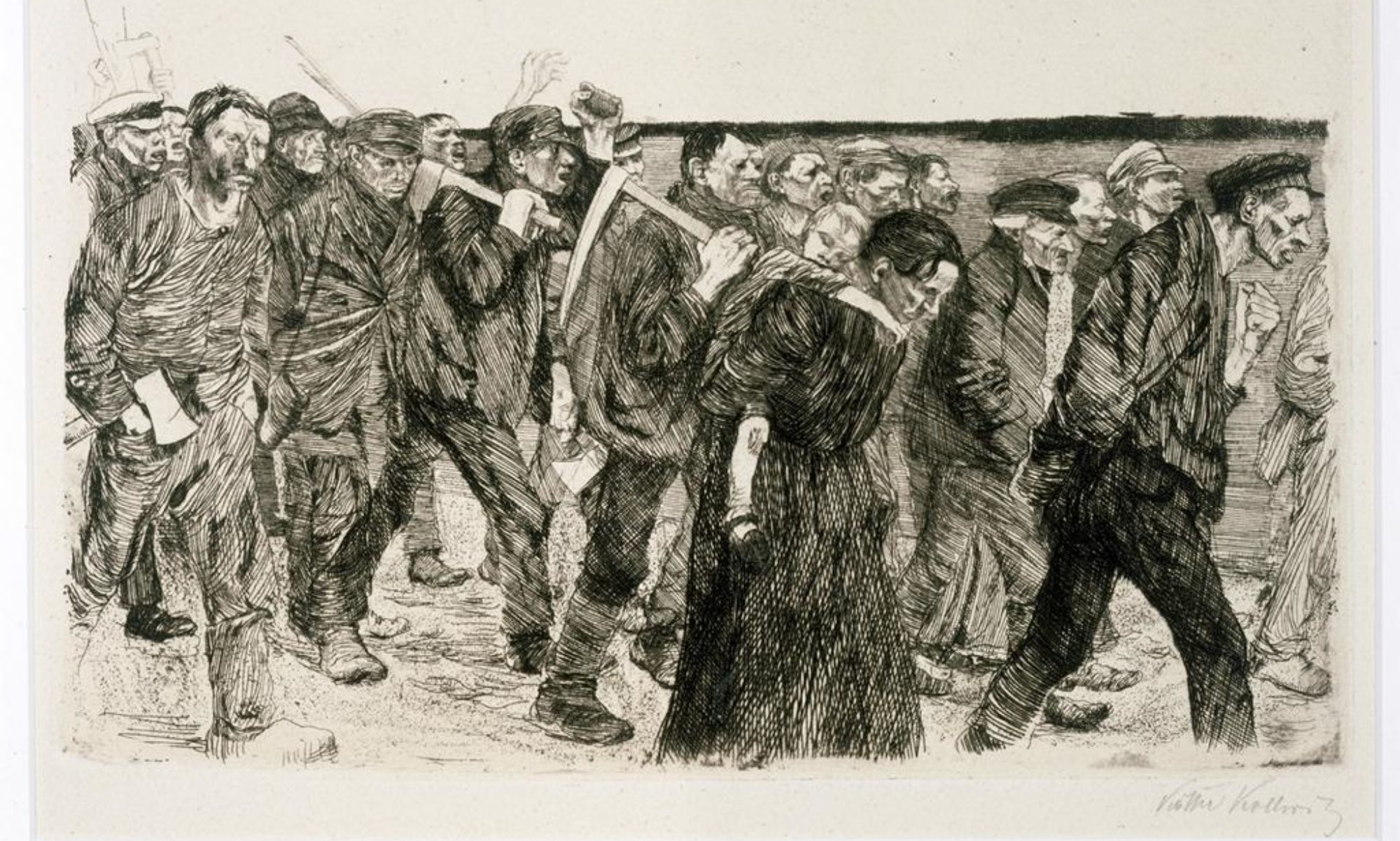
Welcome to Staging Revolutions!

In this course we will read plays about revolution. Specifically, we will be exploring German works from the 18th to the 21st centuries (in English translation) that deal with revolutions, revolts, uprisings, and violence. As the literary form that actually involves people modeling a social situation on a stage in front of other people, drama seems uniquely suited to represent the thoughts, ideas, and impulses behind moments of political and social conflict and upheaval, as well as to explore questions of agency, individuality, collectivity, and nation; yet how does drama represent mass social and political events with only a few actors on stage, and how does the genre respond to this problem of representation? Our focus on revolutions will allow us to see how the history of German drama offers a wide variety of strategies by which literature grapples with society, history, and politics. We will read texts by Aristotle, Lessing, Schiller, Büchner, Kant, Hegel, Marx, Brecht, and Arendt, among others. This is a writing class, which means both that you will learn to write analytically about literature, and that analytic writing will be the primary tool with which you will probe and learn about the texts we will be reading.
Writing is a process that involves many overlapping and recursive stages, including planning, brainstorming, rereading, drafting, revising, reviewing, rewriting, and revising. Your active, thoughtful participation at all stages of this process is essential to your success in this course.